glutenfreie Nanaimo Barsgluten-free Nanaimo Bars

Update: Für das deutsche Rezept nach unten scrollen!
glutenfreie Nanaimo Bars

The January 2010 Daring Bakers’ challenge was hosted by Lauren of Celiac Teen. Lauren chose Gluten-Free Graham Wafers and Nanaimo Bars as the challenge for the month. The sources she based her recipe on are 101 Cookbooks and www.nanaimo.ca.

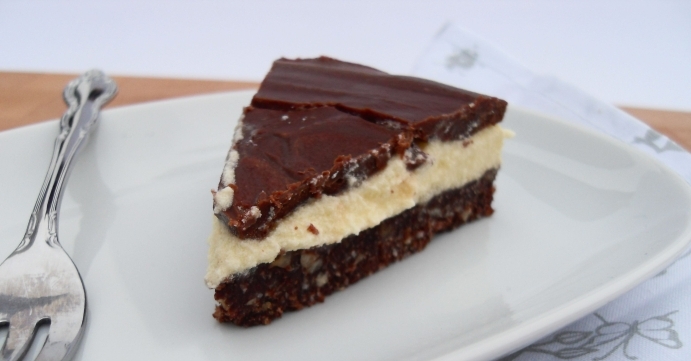
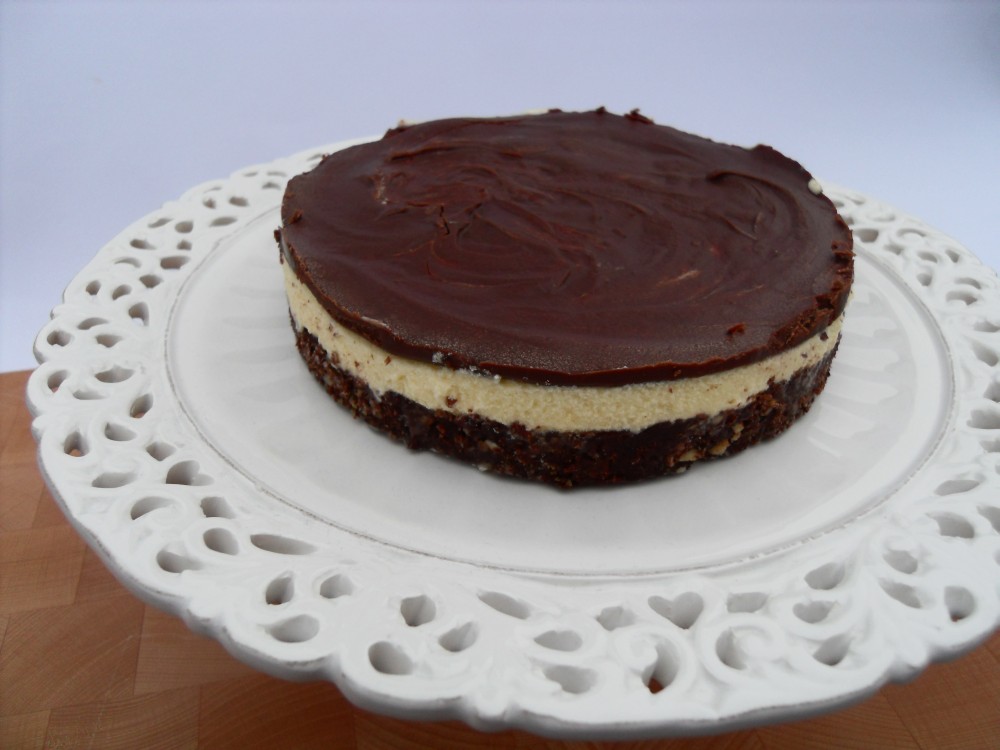
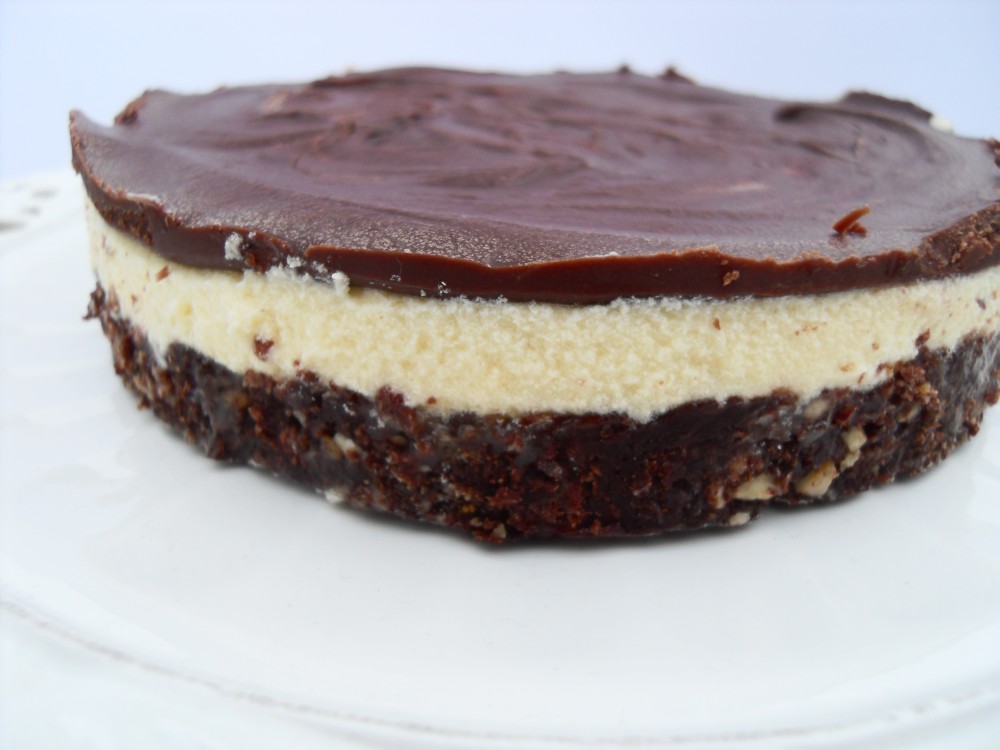
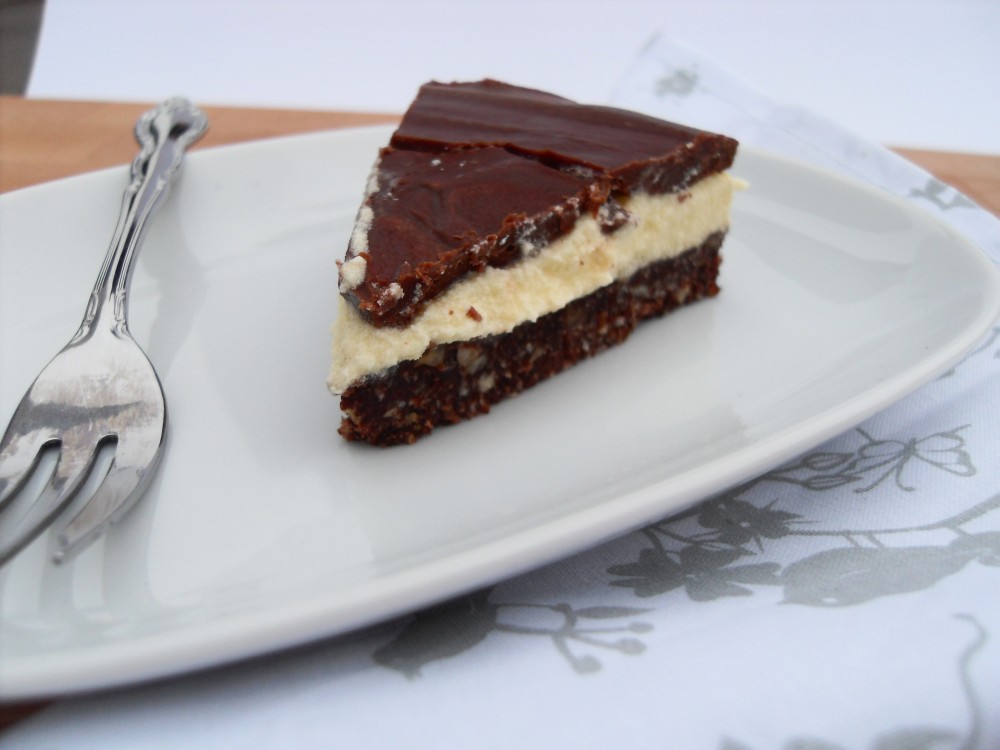
This month challenge was to make a classic Canadian dessert to savour the Olympic Winter Games in Canada this year. This dessert consists of three layers. A base containing crumbles of Graham Crackers, coconut, cocoa and almonds. A middle custard layer and a chocolate topping.
Since Lauren is suffering under celiac disease (dt. Zöliakie) the challenge was to bake the Graham Crackers yourself and gluten-free. Ever I was interested to try some gluten-free recipe. Finally I had the chance!
A lot of people in the world (also in Germany, yes!) have to live gluten-free, as if they wouldn’t, their villi lining the small intestine would be trancated. This reaction is caused by proteins, found in wheat, rye, barley and other crops of the tribe Triticeae.
glutenfreie Nanaimo Bars

First it was very difficult to find the needed flours. We needed rice flour, tapioca flour and sorghum flour (dt. Braunhirsemehl). Rice flour I had already at home. Tapioca flour (or starch), I found in a local Asian supermarket. The sorghum flour was much more difficult. But in a larger wholefood supermarket I didn’t just found sorghum flour, but a lot of more gluten-free flours.

I will make an extra post for the Graham Crackers, because I really like them! I do not know how they taste with normal wheat flour, but actually I don’t really want to know… they are just great as they are and I think that special flavour comes from the sorghum flour. I will definitely bake them again!

Which I can’t say from Nanaimo Bars. I wasn’t so excited about that part of the challenge, as I would never make something like that for myself, as I do not like those sort of things. It’s just too much, too heavy for me.
glutenfreie Nanaimo Bars

I also made some differences regarding to the original recipe. I substituted the almonds with hazelnuts and since in Germany something like custard powder does not exist, I made a mixture of vanilla pudding powder, crème fraîche, butter, icing sugar and a lot of vanilla aroma, because it didn’t taste like vanilla after all and it was just too sweet.

I made just half the recipe and it’s still enough and to spare. Is used an adjustable cake setting ring with 16 cm in diametre.
If I would try it another time (I won’t, but IF), I would leave out the coconut and cocoa from the bottom layer, because the main taste is coconut and cocoa. Just too much of it!
Be cautious! The vanilla pudding powder, as well as the chocolate you take for the topping has to be gluten-free as well, if you want to make it all gluten-free!
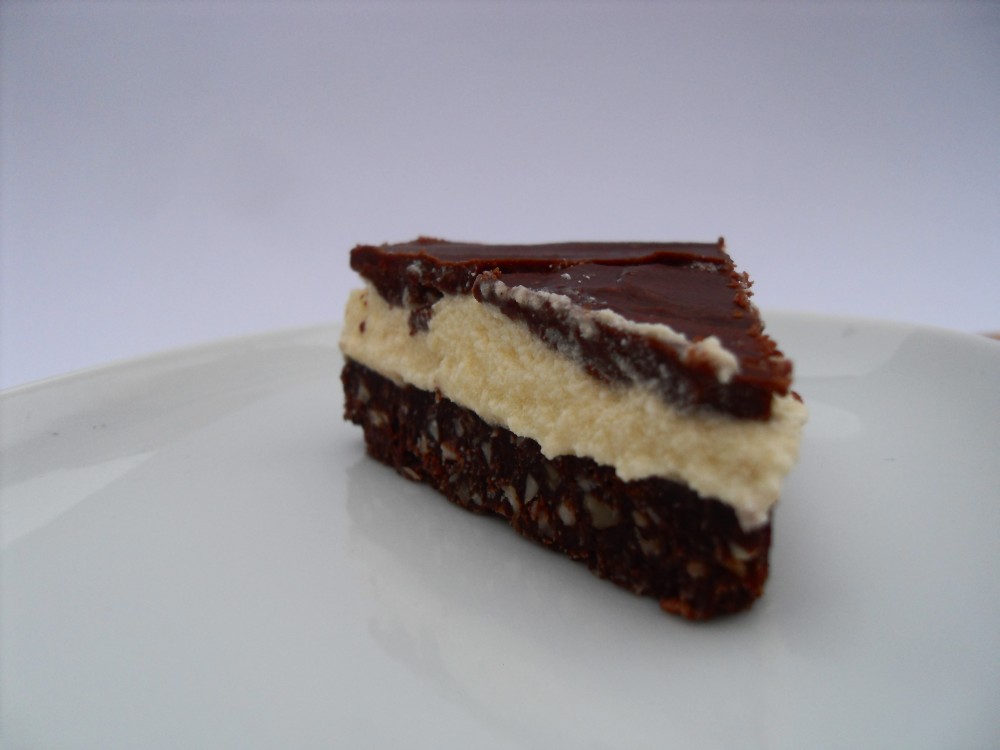
glutenfreie Nanaimo Bars

gluten-free nanaimo bars

The January 2010 Daring Bakers’ challenge was hosted by Lauren of Celiac Teen. Lauren chose Gluten-Free Graham Wafers and Nanaimo Bars as the challenge for the month. The sources she based her recipe on are 101 Cookbooks and www.nanaimo.ca.

This month challenge was to make a classic Canadian dessert to savour the Olympic Winter Games in Canada this year. This dessert consists of three layers. A base containing crumbles of Graham Crackers, coconut, cocoa and almonds. A middle custard layer and a chocolate topping.
Since Lauren is suffering under celiac disease (dt. Zöliakie) the challenge was to bake the Graham Crackers yourself and gluten-free. Ever I was interested to try some gluten-free recipe. Finally I had the chance!
A lot of people in the world (also in Germany, yes!) have to live gluten-free, as if they wouldn’t, their villi lining the small intestine would be trancated. This reaction is caused by proteins, found in wheat, rye, barley and other crops of the tribe Triticeae.

gluten-free nanaimo bars

First it was very difficult to find the needed flours. We needed rice flour, tapioca flour and sorghum flour (dt. Braunhirsemehl). Rice flour I had already at home. Tapioca flour (or starch), I found in a local Asian supermarket. The sorghum flour was much more difficult. But in a larger wholefood supermarket I didn’t just found sorghum flour, but a lot of more gluten-free flours.

I will make an extra post for the Graham Crackers, because I really like them! I do not know how they taste with normal wheat flour, but actually I don’t really want to know… they are just great as they are and I think that special flavour comes from the sorghum flour. I will definitely bake them again!

Which I can’t say from Nanaimo Bars. I wasn’t so excited about that part of the challenge, as I would never make something like that for myself, as I do not like those sort of things. It’s just too much, too heavy for me.

gluten-free nanaimo bars

 I also made some differences regarding to the original recipe. I substituted the almonds with hazelnuts and since in Germany something like custard powder does not exist, I made a mixture of vanilla pudding powder, crème fraîche, butter, icing sugar and a lot of vanilla aroma, because it didn’t taste like vanilla after all and it was just too sweet.

I made just half the recipe and it’s still enough and to spare. Is used an adjustable cake setting ring with 16 cm in diametre.
If I would try it another time (I won’t, but IF), I would leave out the coconut and cocoa from the bottom layer, because the main taste is coconut and cocoa. Just too much of it!
Be cautious! The vanilla pudding powder, as well as the chocolate you take for the topping has to be gluten-free as well, if you want to make it all gluten-free!

gluten-free nanaimo bars

Selbstgemachte GemüsebouillonpasteHomemade Bouillon Paste

 Upate: Für das deutsche Rezept nach unten scrollen!

Selbstgemachte Gemüsebouillonpaste

As I was ill the last two weeks, I wanted to do more for my blog. I made some things – I swear! But it happened, that those things were not good enough for my blog. Unfortunately.

Now that I’m back to work, I’ve done some great things and even more great photos of it! But just no time to write. So this evening I just take the time.

In my ill-time I had a lot of time to read lots of blogs, recipes and other interesting things. I got hold on a simple recipe making your own bouillon paste of vegetables. Since I’m very into making everything on my own, I was thrilled.

Selbstgemachte Gemüsebouillonpaste

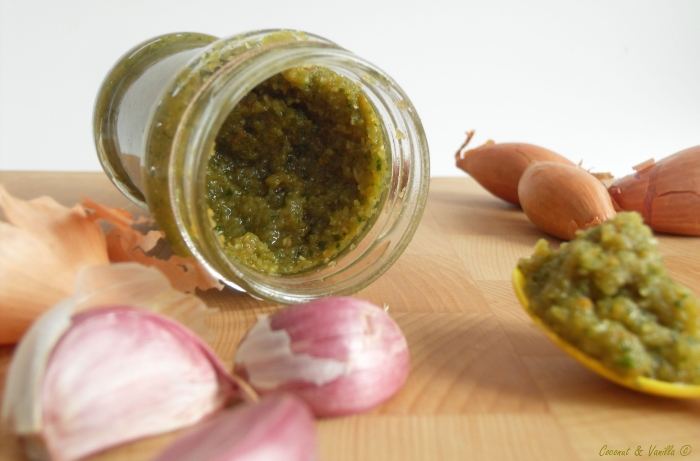
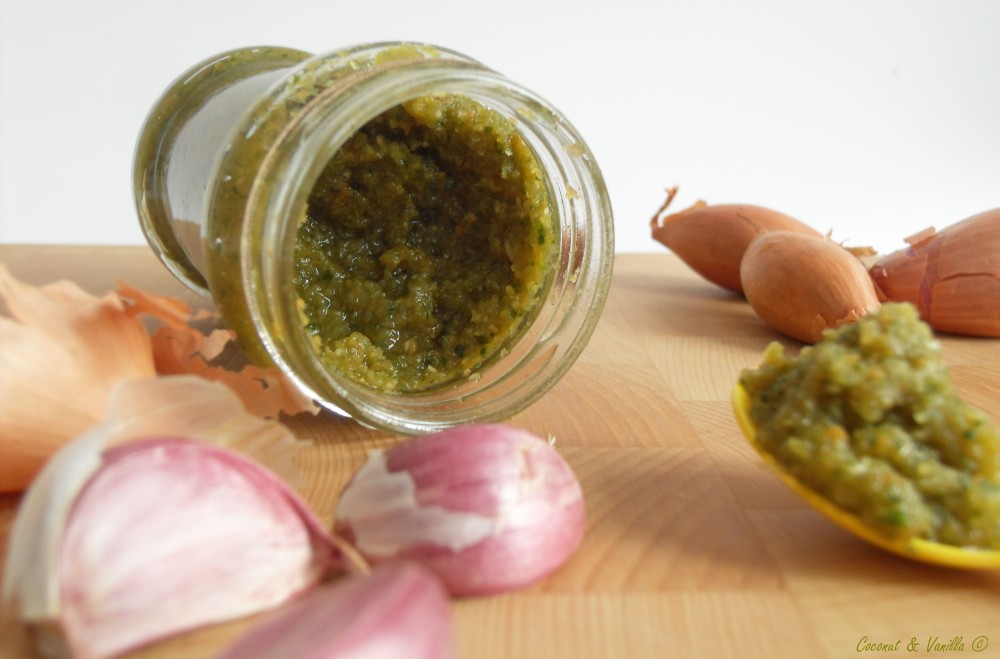
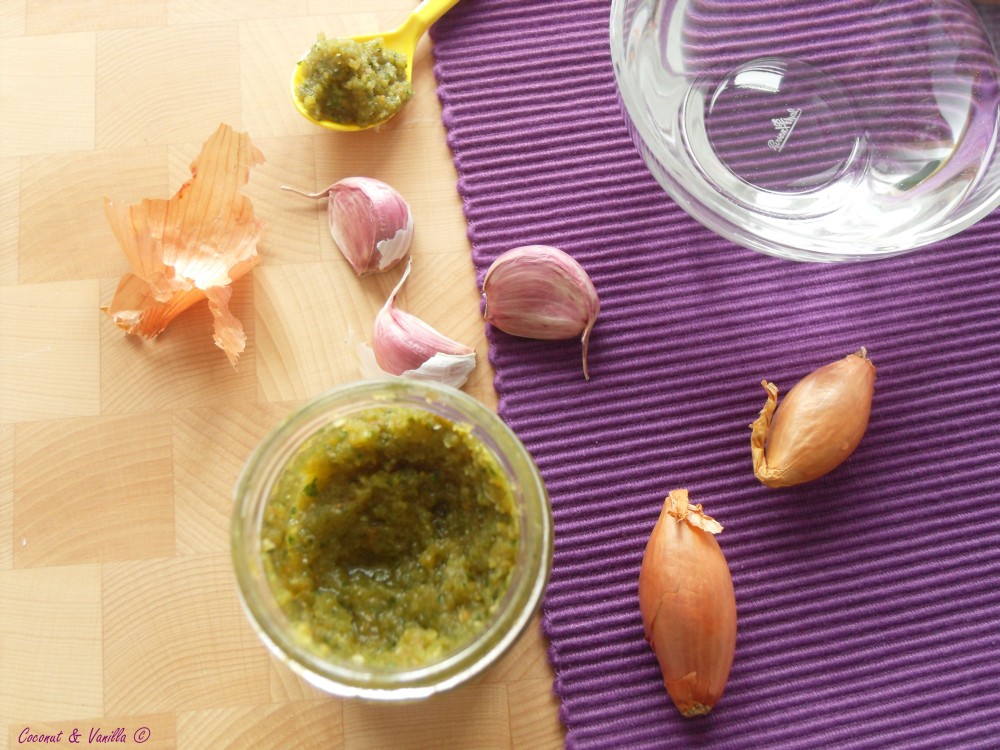
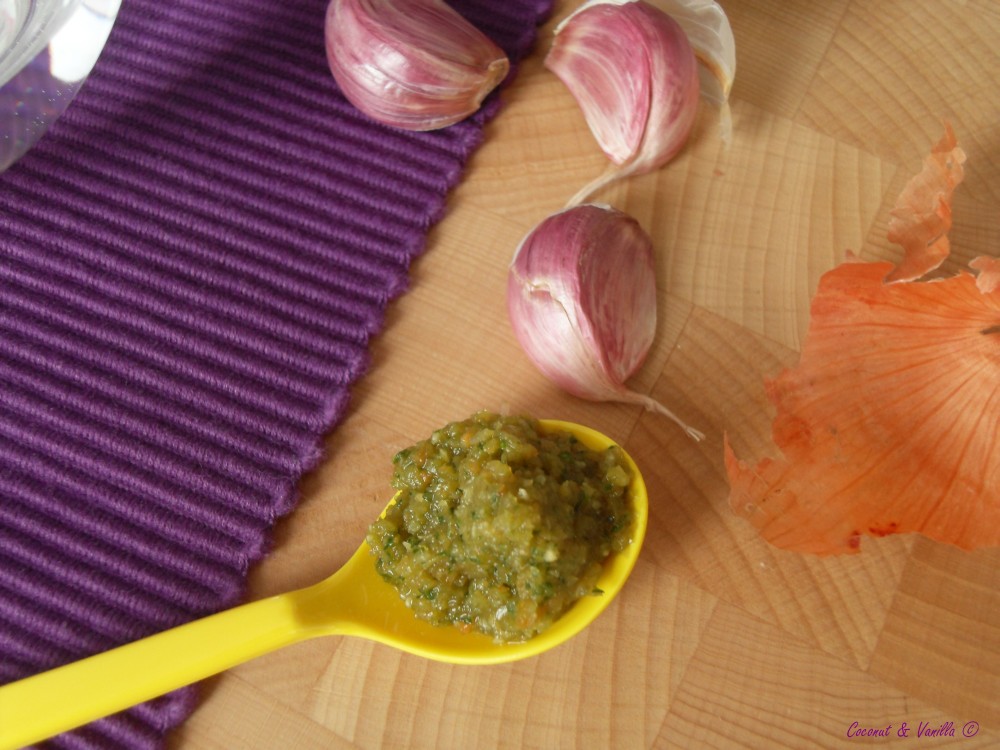
Since I’m not a fan of glutamate in food, I’m using only organic granulated bouillon, because it never contains glutamate. But it can contain other things that you don’t want in there, for example gluten or allergens. So making your own paste, disposes this problem. And of course it’s just great to make your own bouillon, without making a real stock!

Selbstgemachte Gemüsebouillonpaste

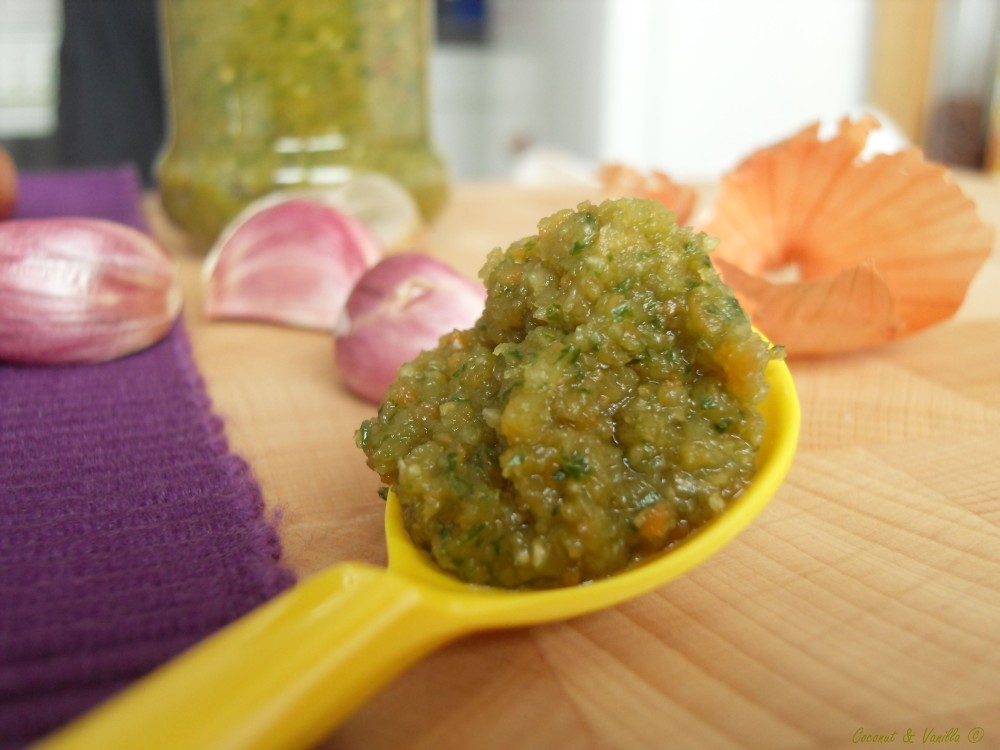
I adapted the recipe from 101 Cookbooks. You can vary, which vegetables you use and also the ratio. I do not like celery stalks. But I like the root. So I just used that. Equally I do not like cilantro, thus I used just parsley. However It would be interesting to add some basil the next time or parsnips.

Selbstgemachte Gemüsebouillonpaste

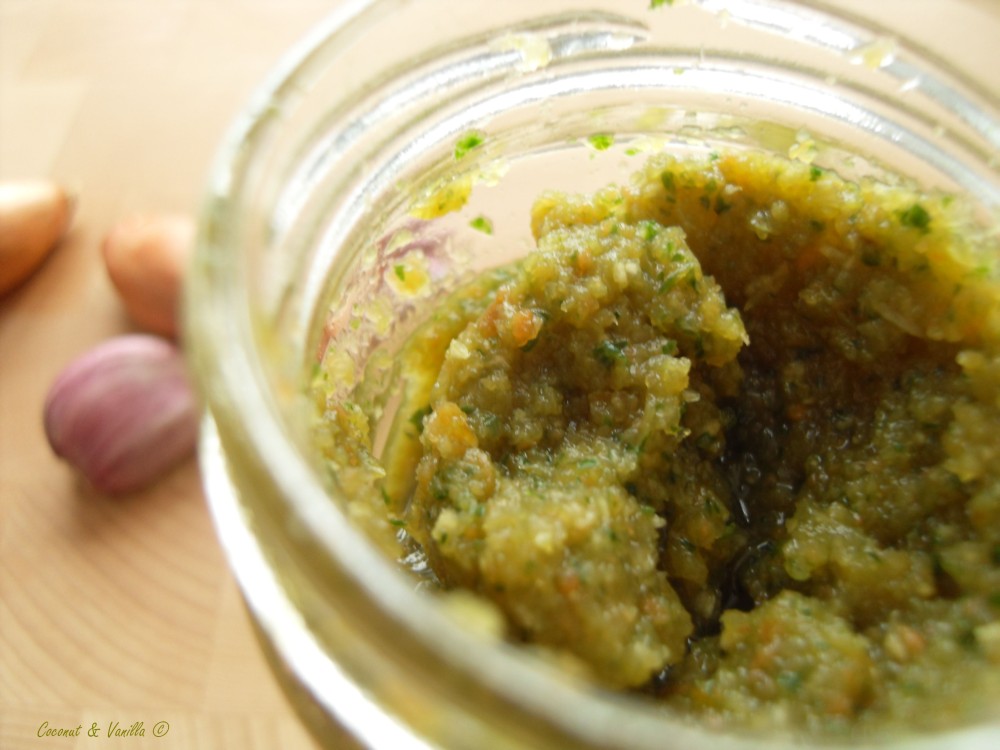
It’s recommended to use a food processor. As I do not have one, I thought optimistic and use my blender. Hmmm… wasn’t that good idea. It didn’t get the leek and the carrots alright. Celery was good with it. In the end I used my immersion blender. It took some time longer I think (since I can’t compare), but it worked very well and I got a moist paste. I didn’t used as much salt, as stated in the „original“ recipe. Maybe that leads rather to a „creamy“ paste, than a loose paste. For me it’s salty enough and if not, adding salt is less a problem, than to withdraw some.

My recommendation is to dissolve 2,5 tsp. per 250 ml (1 cup). It dissolves very good, if you wonder ;-).

I put one jar of the bouillon in the fridge and froze the rest in portions. If you are not using that much bouillon, you can freeze it in ice cube trays, so your portions to thaw are very small. I froze the rest in three portions, every equal to the amount in my fridge. It yields about four 200ml jars.

Selbstgemachte Gemüsebouillonpaste

homemade bouillon paste

As I was ill the last two weeks, I wanted to do more for my blog. I made some things – I swear! But it happened, that those things were not good enough for my blog. Unfortunately.

Now that I’m back to work, I’ve done some great things and even more great photos of it! But just no time to write. So this evening I just take the time.

In my ill-time I had a lot of time to read lots of blogs, recipes and other interesting things. I got hold on a simple recipe making your own bouillon paste of vegetables. Since I’m very into making everything on my own, I was thrilled.

homemade bouillon paste

Since I’m not a fan of glutamate in food, I’m using only organic granulated bouillon, because it never contains glutamate. But it can contain other things that you don’t want in there, for example gluten or allergens. So making your own paste, disposes this problem. And of course it’s just great to make your own bouillon, without making a real stock!

homemade bouillon paste

I adapted the recipe from 101 Cookbooks. You can vary, which vegetables you use and also the ratio. I do not like celery stalks. But I like the root. So I just used that. Equally I do not like cilantro, thus I used just parsley. However It would be interesting to add some basil the next time or parsnips.

homemade bouillon paste

It’s recommended to use a food processor. As I do not have one, I thought optimistic and use my blender. Hmmm… wasn’t that good idea. It didn’t get the leek and the carrots alright. Celery was good with it. In the end I used my immersion blender. It took some time longer I think (since I can’t compare), but it worked very well and I got a moist paste. I didn’t used as much salt, as stated in the „original“ recipe. Maybe that leads rather to a „creamy“ paste, than a loose paste. For me it’s salty enough and if not, adding salt is less a problem, than to withdraw some.

My recommendation is to dissolve 2,5 tsp. per 250 ml (1 cup). It dissolves very good, if you wonder ;-).

I put one jar of the bouillon in the fridge and froze the rest in portions. If you are not using that much bouillon, you can freeze it in ice cube trays, so your portions to thaw are very small. I froze the rest in three portions, every equal to the amount in my fridge. It yields about four 200ml jars.

homemade bouillon paste

Heidelbeer-Buttermilch-Panna CottaBlueberry and Buttermilk Panna Cotta

Update: Für das deutsche Rezept nach unten scrollen!

blueberry and buttermilk panna cotta

Being ill with a painful tonsilitis, which keeps me the week at home, I have a lot of time to spend with my blog. Lucky you!

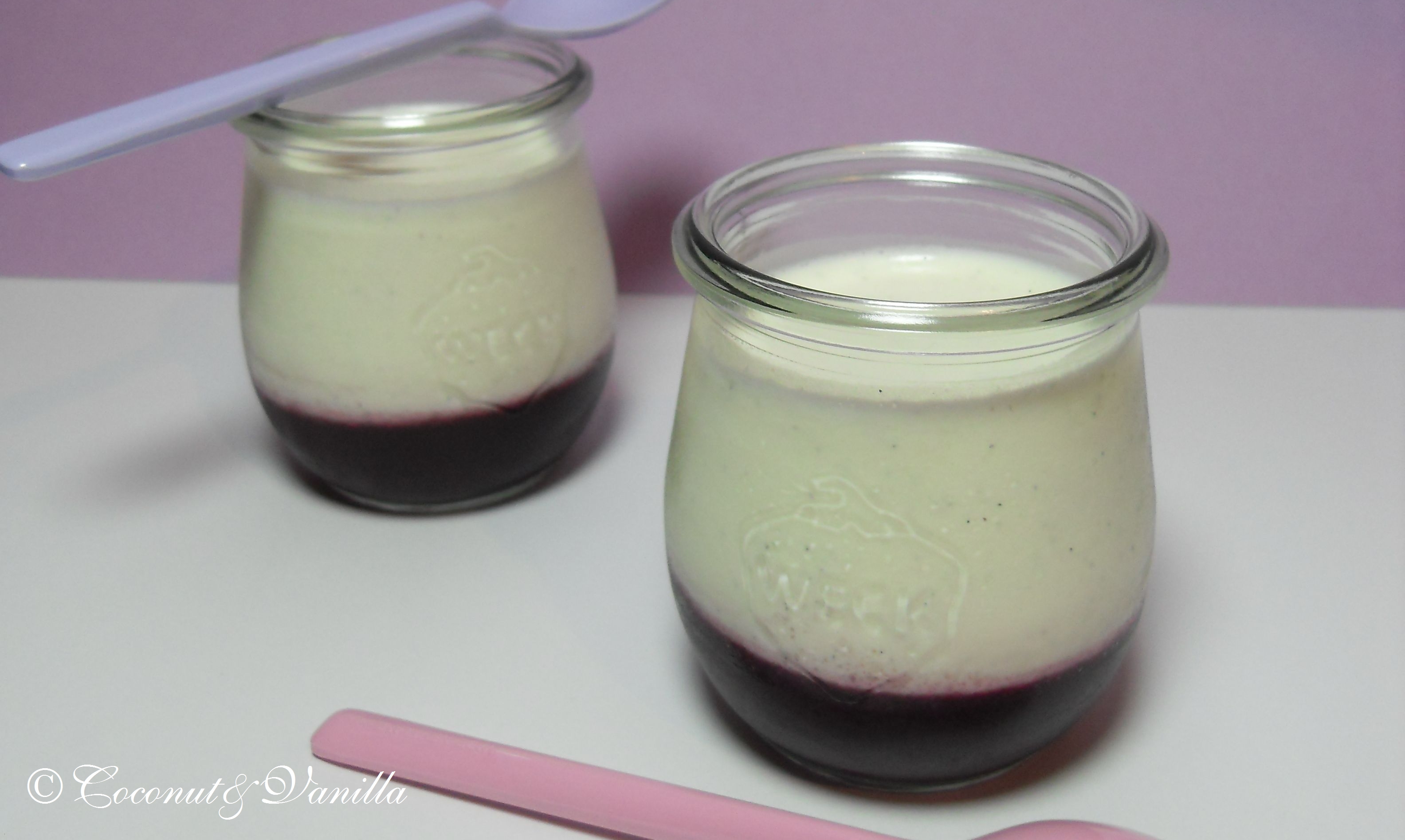
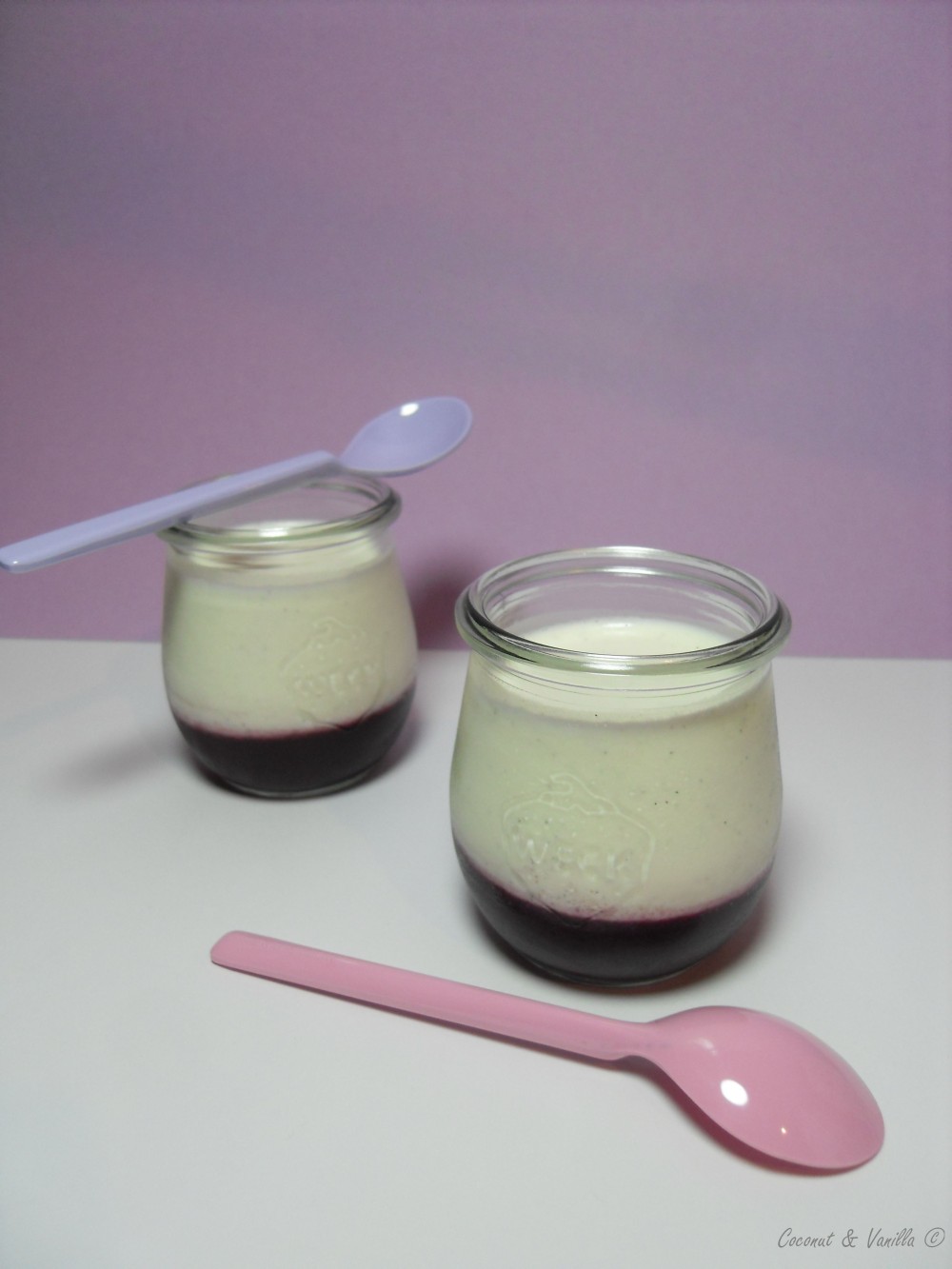
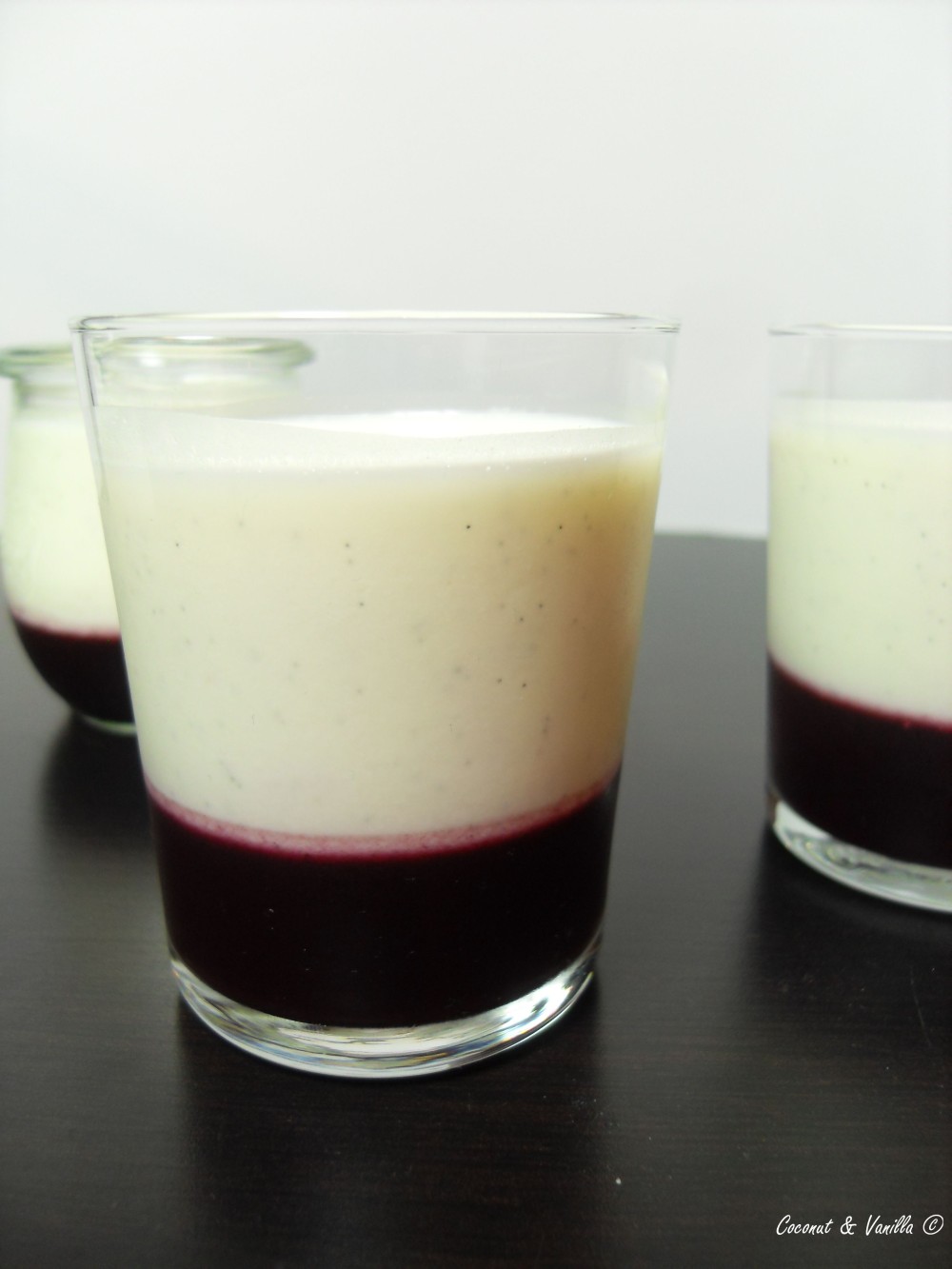
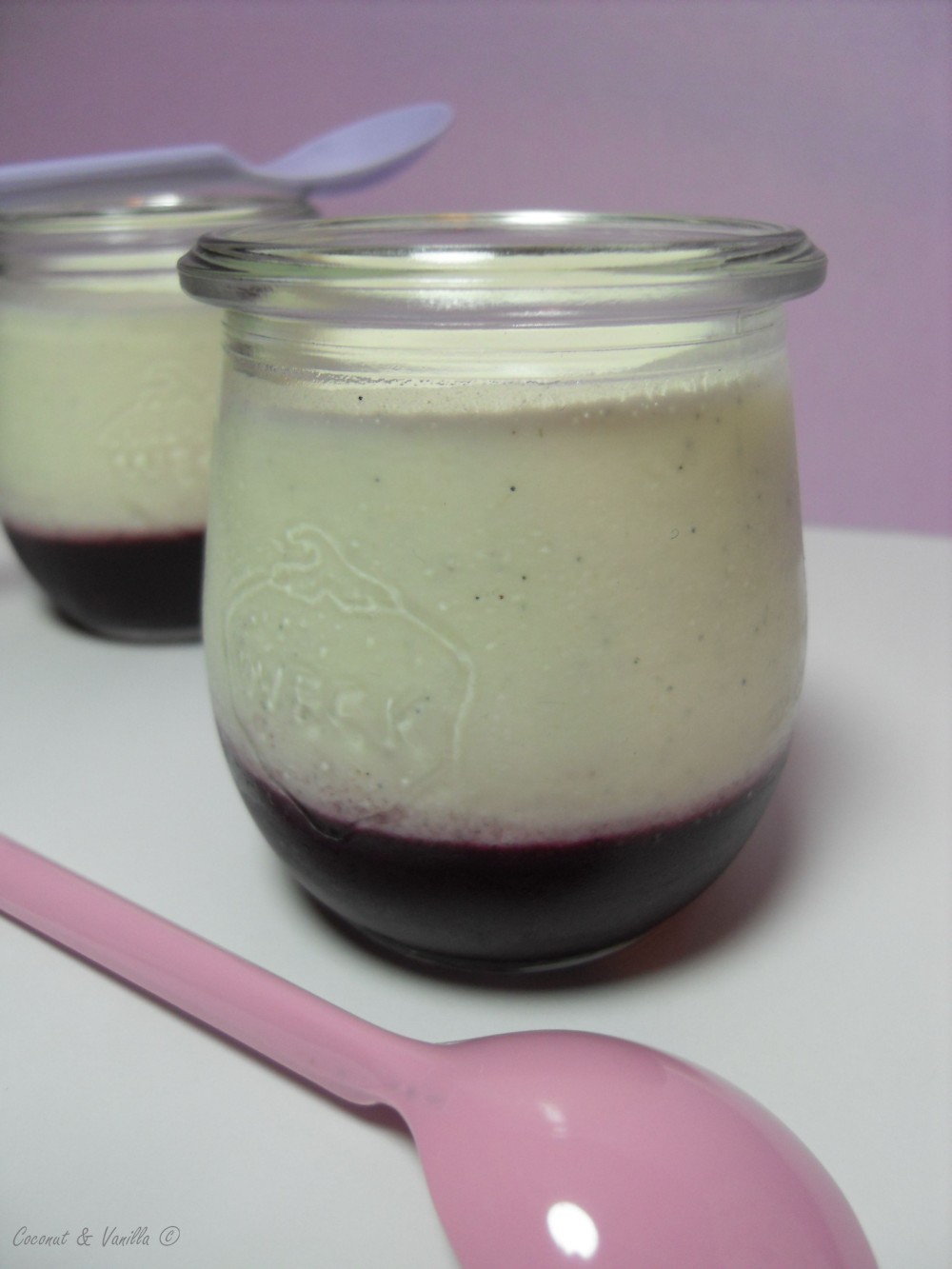
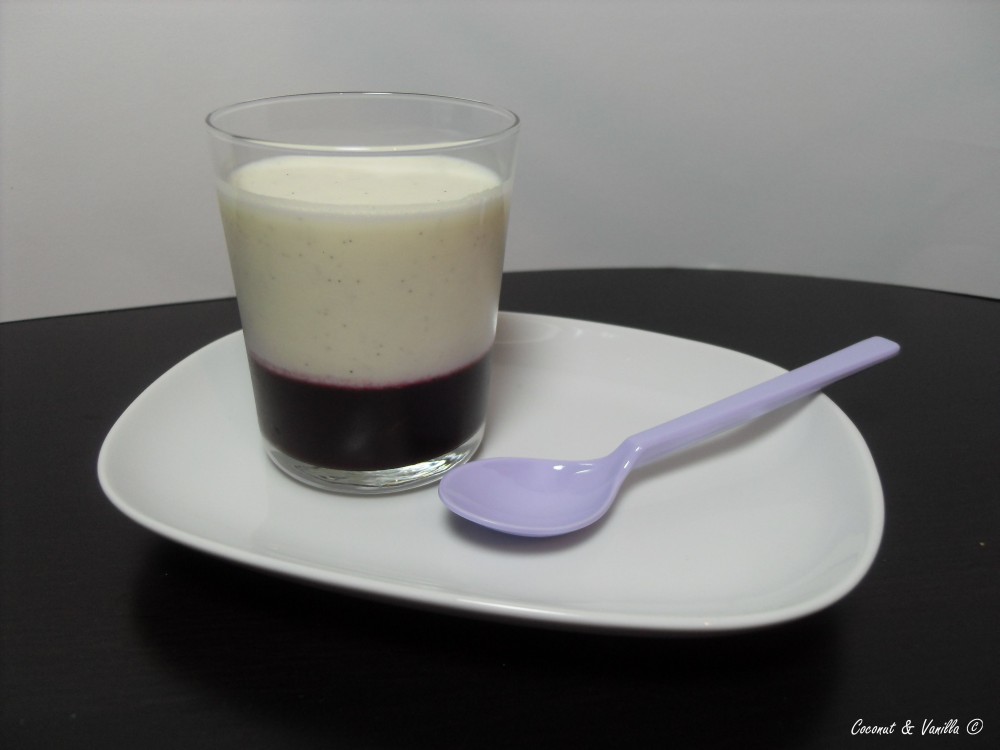
Last weekend I made those beauties: Buttermilk Panna Cotta layered on blueberry puree.

blueberry and buttermilk panna cotta

Originally I wanted use up a mango fruit. I searched the internet and in the end I found a recipe at Tartelette’s. But as it came to peel the mango I realized it’s just over. Over ripe. Smelled a little bit alcoholic. So no dessert with mango then! But I already liked the idea of panna cotta. I mean I love panna cotta! My favourite dessert is coconut panna cotta. But I always want to try something different, new. And the buttermilk attracted me. Luckily it came into my mind, that I still have some frozen blueberry puree.

blueberry and buttermilk panna cotta

So after thawing the puree, I gave it into some nice glasses with the help of a funnel. And then I refroze the glasses with the puree. When it’s frozen it’s a lot easier to layer the panna cotta (or whatelse you like) on the puree so that they do not mix. The buttermilk gives the panna cottas a slight sour note. It tastes good, especially in combination with the fruit, but furthermore I prefer the classical preparation with cream.

I used leaf gelatine. And maybe a little bit too much. The recipe I adapted was with powdered gelatine. As I am not used to it and I’m liking the leaves, I tried to adapt it. The panna cottas were a bit too firm, but still good. I used 3 and a half leaf. I think 2 and a half or 3 leaves are enough. If you want to use powdered gelatine, the original recipe calles for 4 grams (1 3/4 tsp.) dissolved in 1 Tbsp. water.

And feel free to change the kind of fruit puree! I’m convinced, that it tastes delicious with (almost) every kind of fruit. Already thinking of apples, pears, quinces in this season or strawberrys in summer.

blueberry and buttermilk panna cotta

blueberry and buttermilk panna cotta

Being ill with a painful tonsilitis, which keeps me the week at home, I have a lot of time to spend with my blog. Lucky you!

Last weekend I made those beauties: Buttermilk Panna Cotta layered on blueberry puree.

blueberry and buttermilk panna cotta

Originally I wanted use up a mango fruit. I searched the internet and in the end I found a recipe at Tartelette’s. But as it came to peel the mango I realized it’s just over. Over ripe. Smelled a little bit alcoholic. So no dessert with mango then! But I already liked the idea of panna cotta. I mean I love panna cotta! My favourite dessert is coconut panna cotta. But I always want to try something different, new. And the buttermilk attracted me. Luckily it came into my mind, that I still have some frozen blueberry puree.

blueberry and buttermilk panna cotta

So after thawing the puree, I gave it into some nice glasses with the help of a funnel. And then I refroze the glasses with the puree. When it’s frozen it’s a lot easier to layer the panna cotta (or whatelse you like) on the puree so that they do not mix. The buttermilk gives the panna cottas a slight sour note. It tastes good, especially in combination with the fruit, but furthermore I prefer the classical preparation with cream.

I used leaf gelatine. And maybe a little bit too much. The recipe I adapted was with powdered gelatine. As I am not used to it and I’m liking the leaves, I tried to adapt it. The panna cottas were a bit too firm, but still good. I used 3 and a half leaf. I think 2 and a half or 3 leaves are enough. If you want to use powdered gelatine, the original recipe calles for 4 grams (1 3/4 tsp.) dissolved in 1 Tbsp. water.

And feel free to change the kind of fruit puree! I’m convinced, that it tastes delicious with (almost) every kind of fruit. Already thinking of apples, pears, quinces in this season or strawberrys in summer.

blueberry and buttermilk panna cotta

Selbstgemachtes MüsliHomemade Granola

Update: Nach unten scrollen für das deutsche Rezept!

Happy new year everybody!

Selbstgemachtes Müsli

Thank you for your visits and supports in my first months of blogging! I’m always afraid and happy, when I read your comments. I’m always pleased to return the favour and visit your blogs! Some of them have already found their way in my daily reading list.

I hope you enjoyed my new blog last year. I will do my very best this year, too.

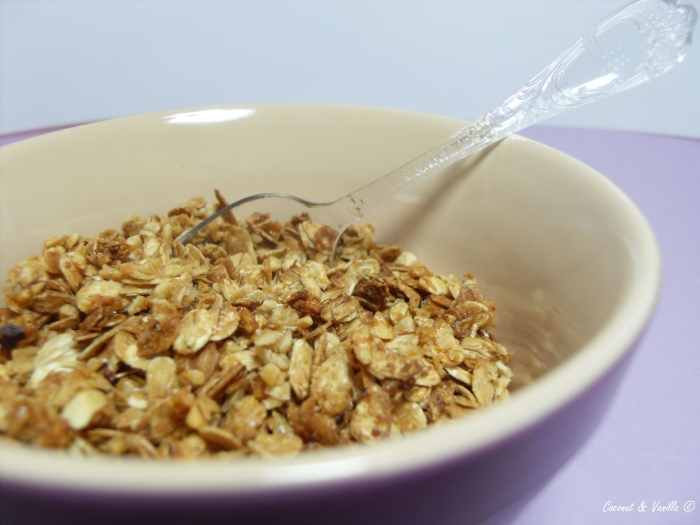
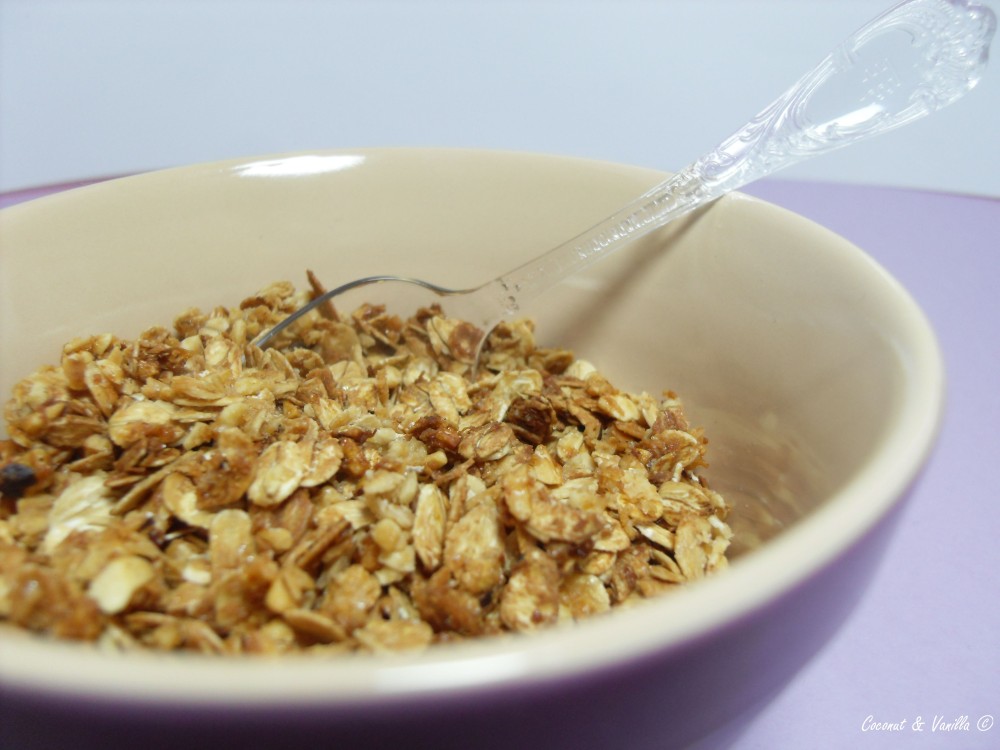
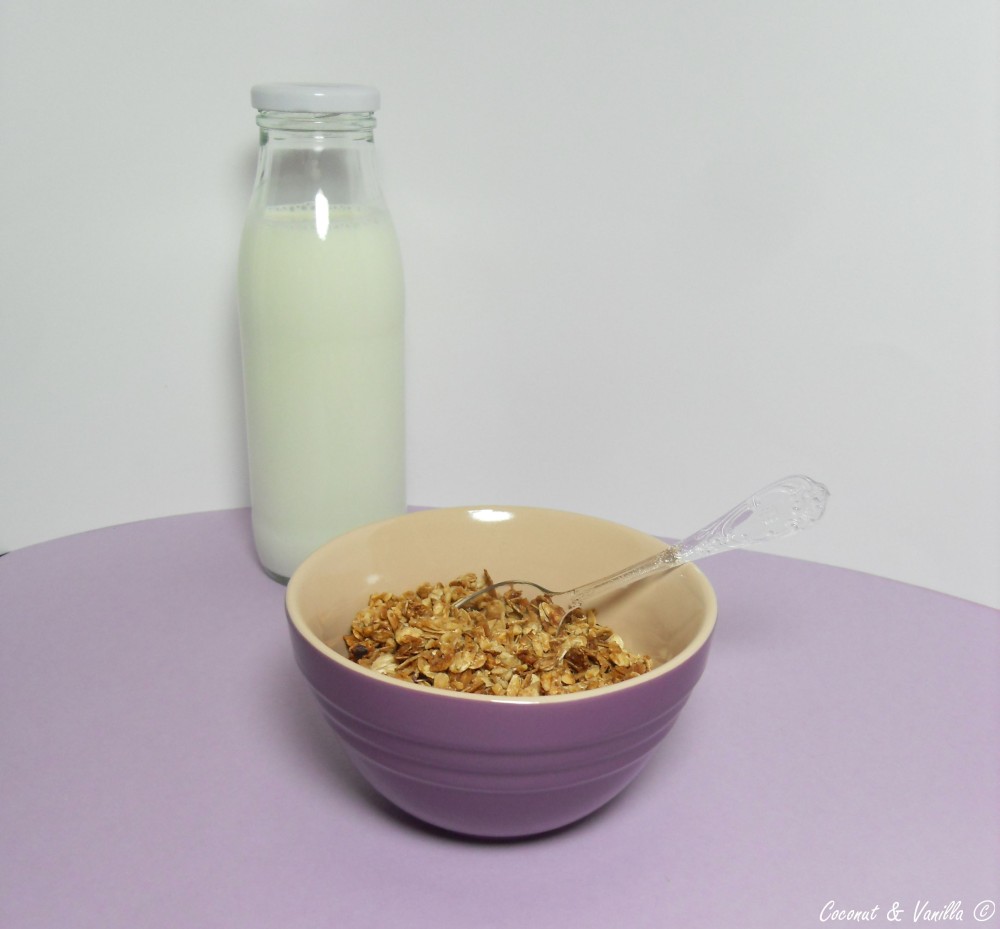
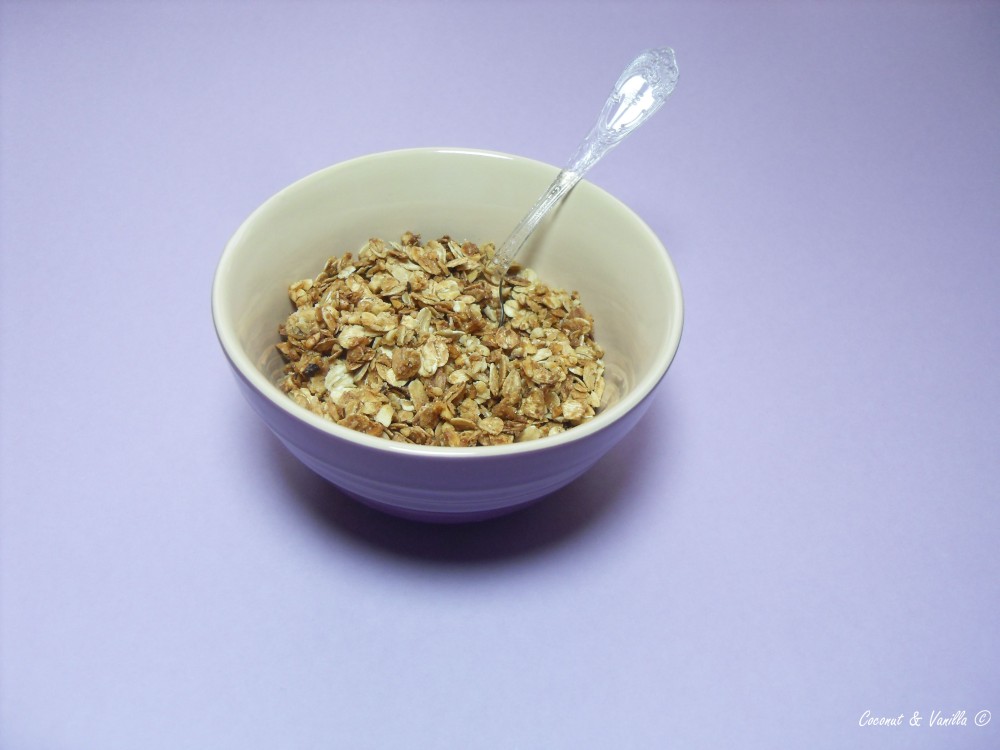
I want to start this year with some homemade muesli. I already produced it in the end-terms of last year, but I first tasted it this morning for breakfast. As I thought of eating this muesli for breakfast, I remembered, that some photos of the making are waiting to be blogged. So I took these photos this morning.

Selbstgemachtes Müsli

I like the idea of selfmade granola. I’m not a fan of bought one’s. For me, they are not crispy enough or too crispy, full of raisins, which I don’t like or dried fruits, which I do not like, too. I’ve only once seen a muesli, with freeze-dried fruits and that was tasty. Neither I like that cheap chocolate pieces in bought muesli.

The benefits of an selfmade muesli are – amongst others – , that you can put in what you like: favourite nuts, favourite fruits, favourite chocolate, favourite cereals. And everytime you can try another combination!

Don’t be scared of making your own granola! It’s fun, very easy and doesn’t take a lot of time.

Over- and underneath you see the granola on a baking sheet, after combining the ingredients. Underneath I put some anti-stick coated aluminium foil from Toppits® . If something like that is not available you can also use normal baking paper or grease the baking sheet lightly. But I admit that this aluminium foil is very handy.

The recipe is enough for about 10 smaller portions (like on my photos). So if you are a muesli-fancier, consider doubling the recipe. One recipe is suitable for one baking sheet.

I like to use whole nuts, peel them, roast them in a pan and chop them then. But feel free to use already chopped nuts.

Selbstgemachtes Müsli


Happy new year everybody!

homemade granola

Thank you for your visits and supports in my first months of blogging! I’m always afraid and happy, when I read your comments. I’m always pleased to return the favour and visit your blogs! Some of them have already found their way in my daily reading list.

I hope you enjoyed my new blog last year. I will do my very best this year, too.

I want to start this year with some homemade muesli. I already produced it in the end-terms of last year, but I first tasted it this morning for breakfast. As I thought of eating this muesli for breakfast, I remembered, that some photos of the making are waiting to be blogged. So I took these photos this morning.

homemade granola

I like the idea of selfmade granola. I’m not a fan of bought one’s. For me, they are not crispy enough or too crispy, full of raisins, which I don’t like or dried fruits, which I do not like, too. I’ve only once seen a muesli, with freeze-dried fruits and that was tasty. Neither I like that cheap chocolate pieces in bought muesli.

The benefits of an selfmade muesli are – amongst others – , that you can put in what you like: favourite nuts, favourite fruits, favourite chocolate, favourite cereals. And everytime you can try another combination!

Don’t be scared of making your own granola! It’s fun, very easy and doesn’t take a lot of time.

Over- and underneath you see the granola on a baking sheet, after combining the ingredients. Underneath I put some anti-stick coated aluminium foil from Toppits® . If something like that is not available you can also use normal baking paper or grease the baking sheet lightly. But I admit that this aluminium foil is very handy.

The recipe is enough for about 10 smaller portions (like on my photos). So if you are a muesli-fancier, consider doubling the recipe. One recipe is suitable for one baking sheet.

I like to use whole nuts, peel them, roast them in a pan and chop them then. But feel free to use already chopped nuts.

homemade granola